INT01
Interconnection pathways
Where do constraints become binding as assumptions change?
How we help
Structure scenarios, model boundaries, and technical trade-offs into a reviewable path from study question to decision.
The opportunity
The grid is becoming more dynamic. The decisions around it should become more rigorous, more transparent, and more useful.
We build analytical pathways that keep engineering context in the loop—from the first model assumption to the final decision.
Project-based technical analysis
IntegraEdge helps utilities, developers, and energy teams evaluate a bounded decision through transparent modeling, sensitivity analysis, and a reviewable technical handoff.
Proposed deliverables
Decision contexts
The value is not another model run. It is a clearer connection between the model, the uncertainty, and the decision in front of the team.
Interconnection pathways
Structure scenarios, model boundaries, and technical trade-offs into a reviewable path from study question to decision.
Planning under uncertainty
Connect optimization with engineering assumptions so alternatives can be compared without losing the system context.
Operational decision support
Translate model signals, constraints, and uncertainty into non-real-time, pre-decision context that responsible teams can inspect and challenge.

Field context
An illustrative planning scene: constraints, network conditions, and trade-offs are reviewed before a bounded decision is scoped. This is not a customer site or an operating result.
Keep the physics visible. Make the assumptions traceable. Design the analysis around the decision.
Core capabilities
You do not need to choose a capability in advance. Start with the decision; fit review identifies the relevant capability mix and whether a bounded first scope is appropriate—not a predetermined software package or modeling method.
Structured technical analysis for generation, storage, and inverter-based resource questions; it does not replace a utility-required study, interconnection authority, or applicable professional sign-off.
Non-real-time planning and pre-decision formulations that turn complex grid constraints into transparent decision pathways.
Project-based, human-reviewed analytical methods that combine domain models with machine learning—not self-serve software or automated advice.
Analysis of distributed and inverter-based resources across changing grid conditions and timescales.
Transmission and distribution representations designed around the question a team needs to answer.
Focus areas
Modern energy systems connect planning, interconnection, operations, resilience, and increasingly diverse resources. IntegraEdge works across those boundaries.
Research directions
A human-supervised HIL research concept is not a launched product, funded award, or customer result; it explores AI inside an energy-system hardware-in-the-loop workflow. The concept keeps operator approval, physical constraints, and run provenance visible while testing whether the next experiment can be chosen more intelligently.
The proposed workflow around energy-system HIL experiments is not a generic autonomy claim or a self-directed controller. This research direction is separate from current project-based analytical engagements; it is a hypothesis underevaluation, not a client deliverable.
Why this direction: a HIL experiment depends on configured equipment, authorized inputs, and review time; choosing the next experiment is itself a technical decision that should remain traceable.
Working question: Can a human-supervised selection loop make the next HIL experiment more informative while keeping constraints and provenance inspectable?
Validation path: establish a reference run → define thresholds and stop conditions → compare an operator-approved candidate selection against the baseline → retain provenance, failure cases, and the review disposition.
Related research direction: a separate research effort is exploring quantum query / bounded-search methods for bounded discrete decision spaces. The working question is how a defensible search boundary should be defined and compared with classical baselines; the problem class, algorithm, computational basis, and evidence remain open.

HIL context
An illustrative laboratory scene for the research direction: a person reviews a configured test bench before a run. It does not depict a live product, autonomous control, or a funded result.
Technical approach
AI is most useful when it strengthens domain reasoning—not when it hides the chain of assumptions. Each step leaves a reviewable record that can move from engineering analysis to the next decision-maker.
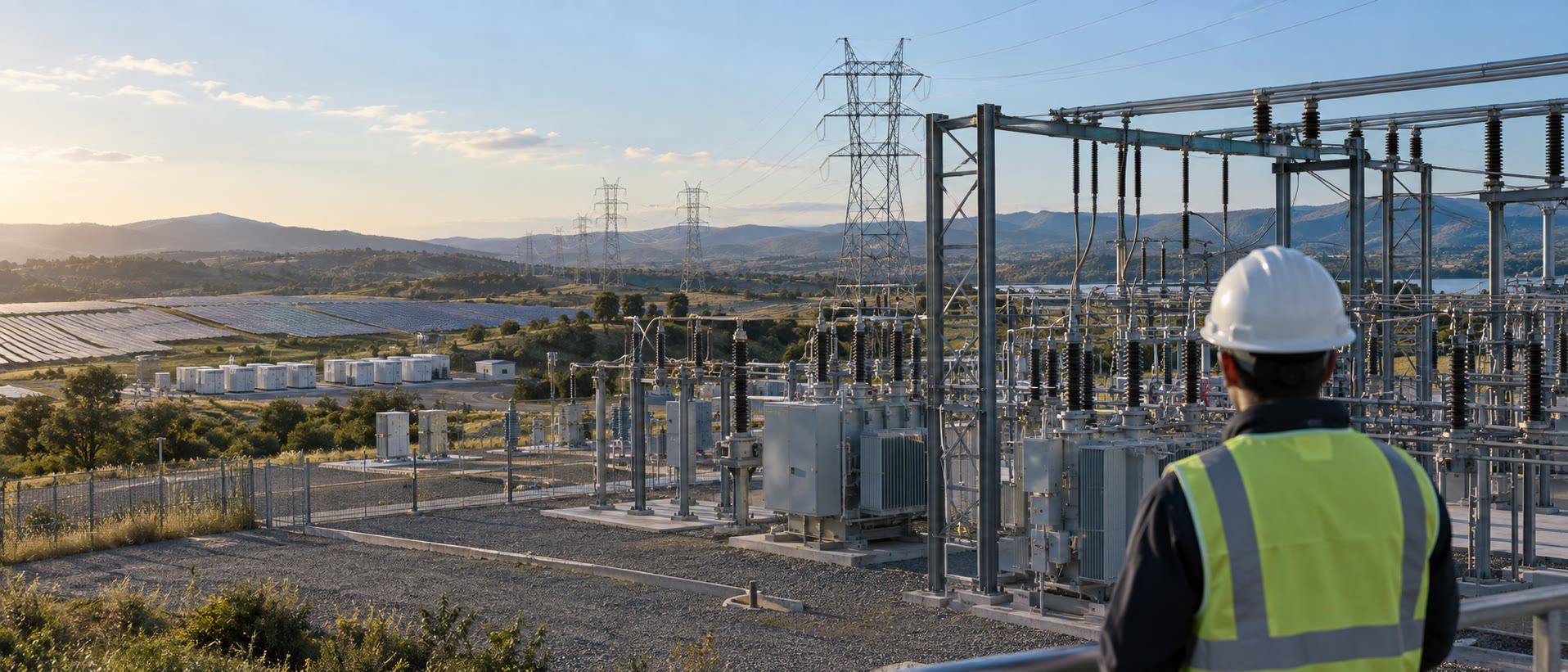
This illustrative photograph grounds the analytical pathway in a real-world electric-grid setting. Three conceptual stages show a reviewable path from the operating question through evidence and sensitivities to the handoff, organized as four proposed artifacts plus a separate review record; the written agreement controls inclusion, final format, and acceptance criteria. For this HIL research concept, the same anatomy can frame a human-supervised energy-system HIL experiment from requirements through evidence and operator-approved handoff; it does not imply autonomous actuation.
Define the operating question, boundaries, evidence, and decision criteria before selecting a method.
Combine physics-based modeling, optimization, and data methods in a form that remains inspectable.
Evaluate assumptions, edge cases, and uncertainty so recommendations are useful beyond a single run.
Deliver the logic, evidence, and open questions in a form the next decision-maker can use.
Project fit
IntegraEdge is most useful when technical depth and decision clarity have to move together.
Several technically credible pathways exist, and the team needs to see where each one holds or breaks.
Engineering, planning, operations, or leadership need a shared view of the evidence and trade-offs.
Power-system models must connect with optimization, data analysis, or applied AI without losing physical context.
Strong fit: one bounded technical decision where assumptions, sensitivities, and cross-team reasoning must remain inspectable.
Use another path when the immediate need is emergency or real-time operational action; self-serve software or automated advice; or final engineering, safety, regulatory, or operational authority or sign-off. The current fit-review path does not provide those functions.
First engagement brief
Current engagement model: a bounded, project-based technical analysis engagement organized around one decision question and governed by a separate written agreement defining its scope. It is not self-serve software, a fixed package, or automated advice. Paid work begins only after both parties execute that agreement, which defines the in-scope boundary, inputs and exclusions, deliverables, review responsibilities, acceptance criteria, timing, fees, and data handling.
Identify the decision owner and reviewer (roles are enough), the decision, system boundary, timing, constraints, and whatever models, data, or prior analysis are available.
Confirm what is in and out of scope, make assumptions and gaps explicit, perform the agreed analysis, compare sensitivities, and record methods, limitations, and open questions.
Proposed artifact set: a decision frame, model pathway, sensitivity record, and handoff memo tracing the agreed inputs, assumptions, methods, evidence, limitations, and open questions. The written agreement controls whether these artifacts are included, their final format, and acceptance criteria.
At the review point, check delivery against the scope and acceptance criteria. A separate review record captures each comment’s disposition under the agreement; added analysis or a changed question is separately scoped.
Scope and responsibility boundary: This pattern is illustrative, not a fixed package, quote, or promise of outcome. Project material follows agreed transfer, access, and retention terms. Decision authorization and delivery acceptance are different. A decision owner determines whether to authorize a next action. Delivery acceptance checks agreed artifacts against the written scope; it does not validate system performance or transfer engineering, safety, regulatory, or operational sign-off. The separate written agreement controls acceptance criteria.
INTEGRAEDGE LLC
Company
IntegraEdge LLC is a Kansas-based technical analysis company focused on power-system engineering, energy analytics, and applied artificial intelligence. Work is project-based and human-reviewed.
We are building a practice where strong engineering models, modern computation, and responsible product thinking reinforce one another.
Independent company: IntegraEdge is an independent company. Any academic or prior research references are background context only; they do not imply endorsement, sponsorship, ownership, or approval by any university, laboratory, or funding agency.
Applied research direction: A human-supervised workflow for energy-system HIL experiments, with operator approval and evidence boundaries kept visible.
Working together
A useful engagement should be understandable from the first conversation: the decision, the evidence, the boundaries, and the handoff.
With the decision—not a package selection or file transfer. Describe the decision, available evidence, constraints, and timing; you do not need to choose a capability or attach project files. Any proposed paid work remains subject to fit review and a separate written agreement.
A fit review may lead to a proposed bounded next step, a note identifying missing context, or no further step when the request is outside the current engagement model. It is not analysis or a quote, and no response or response time is promised.
Only after both parties agree to a separate written agreement covering the parties, scope, inputs and exclusions, deliverables, review responsibilities, acceptance criteria, timing, fees, data handling, and other applicable terms.
No. Early work can identify which evidence is decision-critical, what can be learned from existing material, and where uncertainty must remain explicit.
No. IntegraEdge uses project-based, human-reviewed AI and data methods to strengthen analysis and communication while keeping engineering assumptions, limitations, and review points visible. It is not self-serve software or automated advice.
The exact format follows the written scope. The proposed artifact set is a decision frame, model pathway, sensitivity record, and handoff memo; together they make the agreed inputs, assumptions, methods, evidence, limitations, and open questions inspectable. Review comments and dispositions belong in a separate review record.
The photograph is illustrative grid context, not a live dashboard or client site. Read the overlaid flow left to right: frame the decision, connect evidence and sensitivities, then hand off the reasoning. The four cards below expand those three conceptual stages into reviewable actions.
Use another path when the immediate need is emergency or real-time operational action; self-serve software or automated advice; or final engineering, safety, regulatory, or operational authority or sign-off. The current fit-review path does not provide those functions.